
Why 153 Steps?

It is learning how to die that we truly learn to live.
I didn’t used to understand that line. It sounded like something a monk would stitch into a robe and I would nod at politely, then go back to my inbox.
But in the past year or two, my life has become crowded with illness and endings. Friends have passed. Others are in treatment, or in that long, suspended hallway called “we don’t know yet.” Some are caregivers, living inside a strange double existence: one foot in the world of appointments and medications, the other trying to remember what it means to simply be a person, not a nurse or an advocate.
And in the midst of all this, I live 153 steps from the ocean.
Those steps have become a kind of pilgrimage. The tide is different every day: loud, quiet, flat, furious, but always moving toward some form of letting go. Waves rise, shine for a moment, then collapse and disappear. If you watch long enough, you realize that this is the whole deal. Arising, cresting, dissolving. Over and over, without drama.
Death, when it starts visiting your friends, loses its costume. It stops being an abstract “someday” and becomes a series of phone calls and text messages. The cancer is back. We’re moving to hospice. He’s resting more now. You start to know what hospital light looks like at midnight, even if you are not the one lying in the bed.
Something quiet but seismic happens inside you. The illusion of endless time cracks.
All the things you were going to get around to “later” begin to look suspicious. Later is not a real place. It is just a story we tell to avoid feeling how fragile “now” actually is.
This is where learning how to die comes in, not as a morbid obsession, but as a kind of radical honesty.
Learning how to die means recognizing that everything is already in motion toward its own ending. Relationships, roles, bodies, identities, seasons of life. Instead of looking away, we let that awareness into the room. We stop pretending we are the one exception to impermanence.
Paradoxically, that is when life sharpens.
The coffee on the deck tastes more like coffee. The text from a friend saying “thinking of you” lands differently. Even the tedious parts, doing dishes, paying bills, folding laundry, become proof that, for this brief moment, we still get to participate.
Living near the ocean, I have daily access to a teacher that never uses words. The sea does not bargain with time. It does not hoard a single wave. It does not demand guarantees before it moves. It simply meets the shore in whatever form today permits.
What would it be like to live that way?
To love without waiting for the perfect conditions.
To forgive without needing the other person to understand everything.
To say “I’m scared” or “I’m grateful” or “I’m here” while the chance is still available.
Learning how to die, in this sense, is not about giving up on life. It is about giving up on the fantasy that life will start later, when things are finally arranged just so. It is about letting old identities die, the ones built on productivity, perfectionism, being needed, being impressive, so something less defended can step forward.
Illness and caregiving strip life down to its essentials in a way that can feel brutal, but also clarifying. When someone you love is in real decline, the only currency that matters is presence. Not solutions. Not strategies. Just the courage to be there, to witness, to hold a hand, to sit in silence when there is nothing left to say.
That, too, is a rehearsal for our own dying: can we stay present when things cannot be fixed?
I think of those 153 steps as a small vow. As long as I can walk them, I want to remember that my life, too, is a wave in mid crest. My job is not to cling to the form it is taking today, but to meet it fully while it is here.
So I try, imperfectly, to live as if nothing is guaranteed and everything is precious:
To tell people I love them without assuming they know.
To say thank you a lot more, even for small things.
To let myself rest without waiting for disaster to justify it.
To notice the particular shade of the sky on this evening, not the memory of skies past.
It is learning how to die that we truly learn to live,
because only when we see the edges of our time
do we start using the middle of it with any real sincerity.
And tomorrow, or the day after, I will walk those 153 steps again and let the ocean remind me: every ending is already folded into this moment. The wave is already returning to the sea.
The question is simply:
While I am still standing here on the shore,
how fully am I willing to be alive?
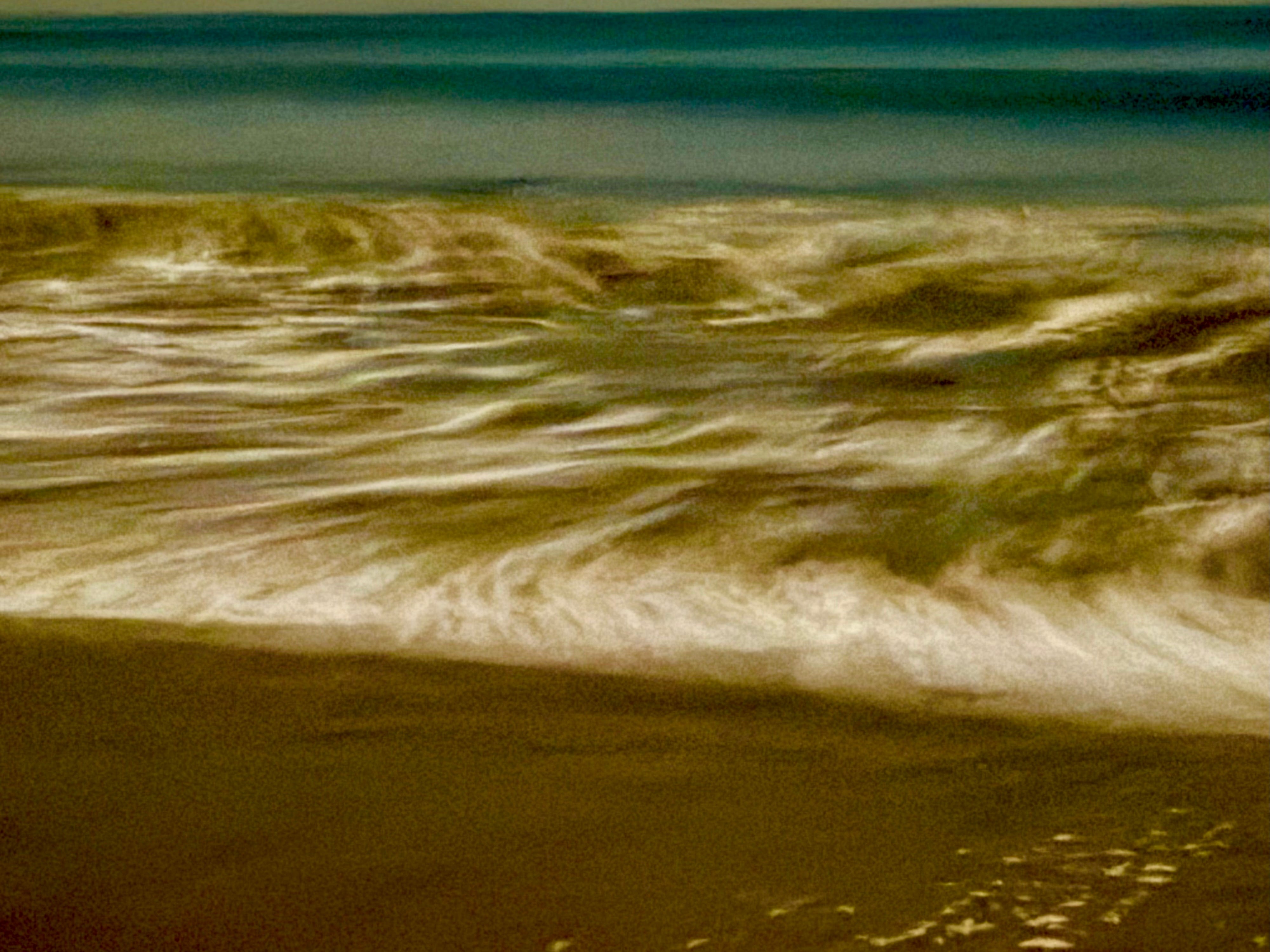
I came here so I could understand what 153 steps means to you. I too have faced a lot of endings, be it by death, relocation, political differences or other reasons. I love the beach too, although I am not as close as you! Every day it has a new, unique mood. The sand shifts, the waves take on new shapes, the tides vary daily, and colors change with the sky.
As I walk barefoot through the waves, following my dog as she chases her ball into the water and then ditches me, hiding her ball in between crevices in the rocks … this grounds me. Centers me. Reminds me quite simply, to be grateful for this beauty, to count my blessings and know that love always wins, truth prevails and change is a necessary, vital part of life.